Britta Padberg
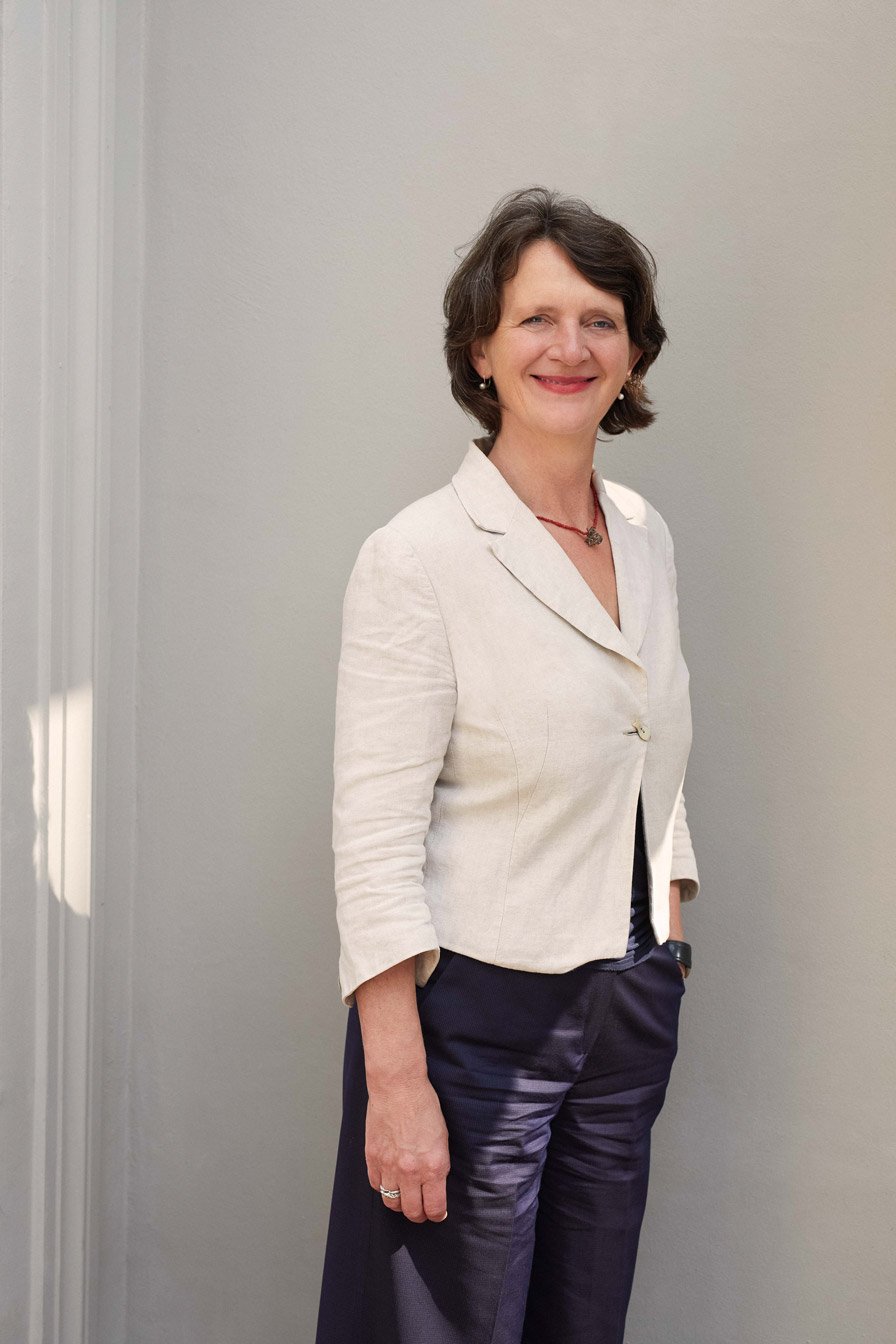
Britta Padberg
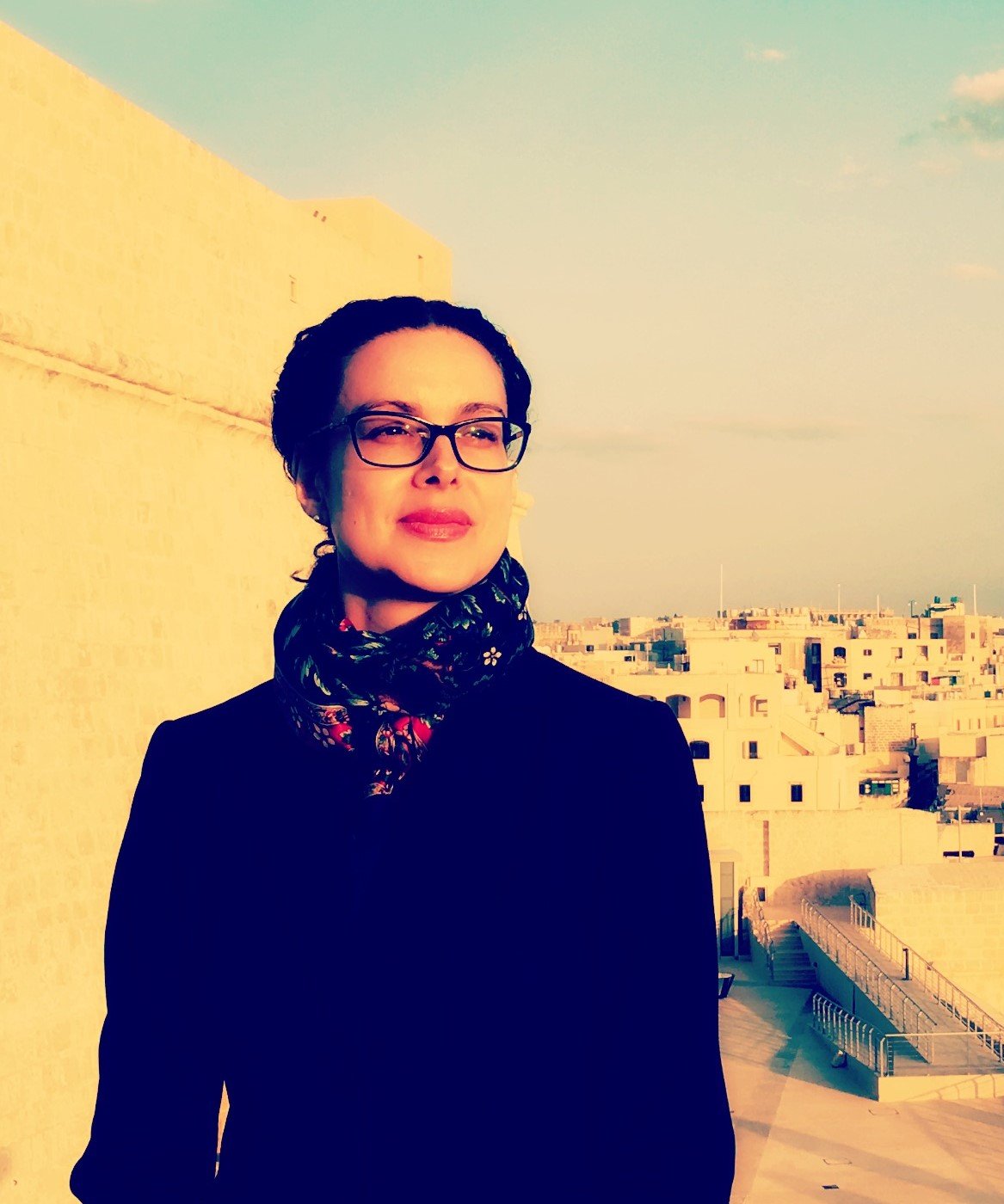
Britta studied biological anthropology and history and received her PhD from the University of Göttingen. She has many years of experience in science management and has worked for the Cusanuswerk, the German Science and Humanities Council (Wissenschaftsrat), and the Academy of International Affairs (NRW), among others. She was managing director of the Center for Interdisciplinary Research (ZiF) at Bielefeld University for twelve years.
Her growing interest in the fruitful interplay of academic insight and entrepreneurial energy has brought her to THE NEW INSTITUTE.
Form, Content, and Dimension of THE NEW INSTITUTE
THE NEW INSTITUTE was an innovative experiment. It was a bold experiment. And it was ahead of its time. It will continue to have an impact, even after its closure.
With its creation in 2020, THE NEW INSTITUTE attracted a lot of attention right from the start. In Germany, the founding of an Institute for Advanced Study (IAS) by a private patron was a novelty. The first Institute for Advanced Study was established in Princeton in 1930. Here, too, it was private money that made the institute's founding possible—a type of philanthropic commitment that is widespread in the United States. Institutes for Advanced Study are not only about promoting research, but also about an extraordinary way of life: scholars living together for a limited period of time. This requires a lot of effort. It is not only a matter of making financial arrangements (compensation payments, replacement costs, scholarships) for the fellows, but also of ensuring good living conditions for them and their families on site. This includes everything from suitable housing and increasingly complicated visa issues to organizing school and kindergarten places, accompanying fellows to government agencies, providing support with health problems, and offering ongoing assistance with settling in locally. And, of course, above all, skillfully curating the transdisciplinary activities at the institute. Seen in this light, an Institute for Advanced Study is probably the most complex form of research funding. In Germany, this extraordinary effort is mainly financed by public funds.
Over the past 95 years, a variety of different examples of this special type of institute have emerged worldwide. Four founding waves can be distinguished, triggered by changing issues in science policy (see Padberg 2020). However, all IAS share three fundamental principles: freedom and time for research, encounters between different disciplines, and the formation of learning communities at the highest level.
Conceptually, THE NEW INSTITUTE adopted the form of an IAS and supplemented it with elements of a think tank: the aim was not only to bring together academics of different disciplines, but also to involve practitioners—to bring together the best thinkers from different sectors in an intensive collaboration. The thematic focus was on the really big questions, i.e., those we cannot avoid if we want to lead a meaningful life: How do we understand our existence, our relationship to other people, to non-human beings, and to the next generation? As with think tanks, however, the goal was not to remain at the level of theoretical considerations, but to work together to develop concrete proposals for shaping just and sustainable economics and lifestyles.
Yet the mission was not simply to transfer knowledge from theory to practice, but to create a new form of joint knowledge generation, with theory and practice working together on equal footing. The goal was to make broad epistemic plurality fruitful. Or as former Peruvian President Francisco Sagasti suggests (see interview below): to educate practical thinkers who are able to switch between theory and practice at lightning speed. This is all the more urgent because we are seeing that old designs no longer work and many areas of our societies need to be fundamentally rethought.
There was no blueprint for the institutional format. Opinions are divided as to whether THE NEW INSTITUTE was too experimental or not experimental enough. And there was plenty of debate at the institute—which was to be expected, since it was not about academic distance but personal involvement. At times, the fighting was fierce, with people asserting their own perceived superiority by pointing to their reputation, influence, or radicalism.
But there were also many rays of hope, shared learning processes, and exchanges beyond the programs. “My own professional world is often too cautious, too eager to stay ‘constructive’, which, in practice, means avoiding anything that might make the powerful uncomfortable. Here, I met people who reminded me that anger, when aimed well, can be a source of clarity,” summarizes UN advisor José Luis Chicoma, chair of The Future of Food program. Kenneth Amaeshi, who chaired the Africapitalism program, after joining the institute wrote: “Through the Africapitalism research program at THE NEW INSTITUTE, the One Kindred One Business Initiative (OKOBI) has been identified as a possible way of addressing the challenges of unemployment in Africa. It was an opportunity to make history collectively. TNI will ever be remembered as OKOBI's intellectual springboard.”
Everything at THE NEW INSTITUTE was highly ambitious. Epistemically, financially, and socially challenging. And in the end, the institute failed in these ambitions. But perhaps it had to fail because the conditions are not yet in place: the realization by a broader public that old plans no longer work, that the existence of billions of people is at stake, and an understanding of the enormous responsibility that rests on the current generation. Perhaps it is also a lack of confidence and belief that it is still possible to stop the rolling avalanche of climate change and global anti-democratic erosion. In the end, two camps faced each other: the apocalyptics and the utopians. Maybe both are equally far removed from our reality...
A more detailed evaluation of THE NEW INSTITUTE experiment will take some time. However, reflections of some of the fellows, which can be found here, provide initial indications that Erck Rickmers' original idea will be carried forward and flourish in other places.
Britta Padberg, Managing Director THE NEW INSTITUTE
More Reflections
-
interview
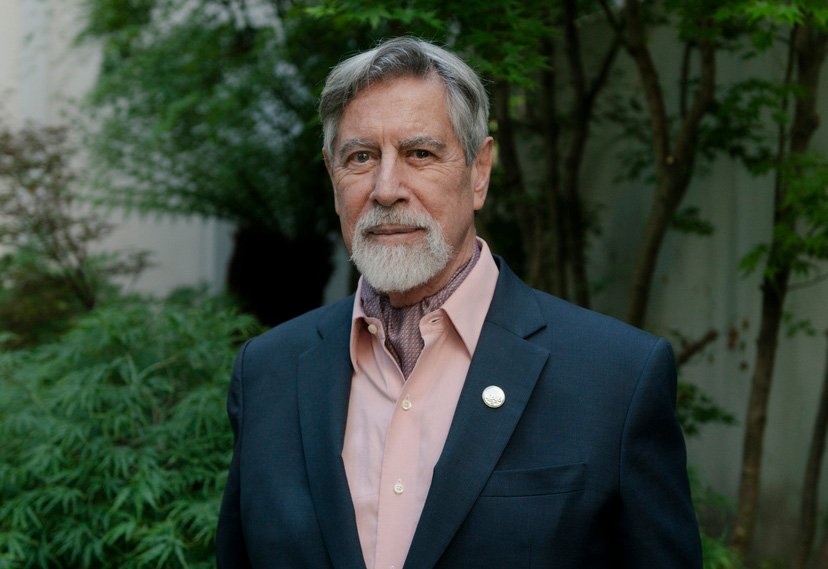
Reflections on THE NEW INSTITUTEQ&A with Francisco Sagasti
-
commentary
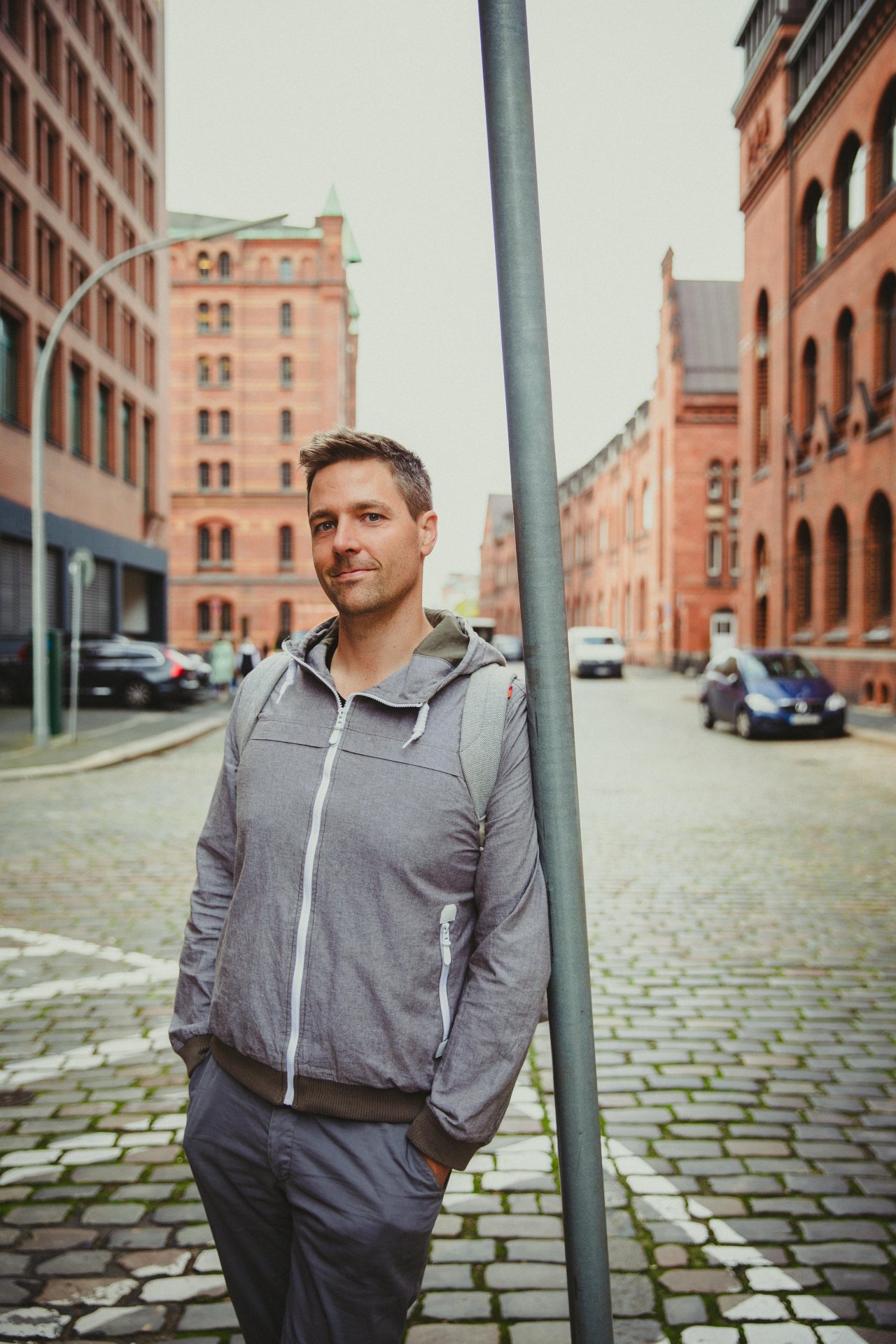
One Institute Is Not Enough: Form Follows PlanetBy Frederic Hanusch
-
commentary
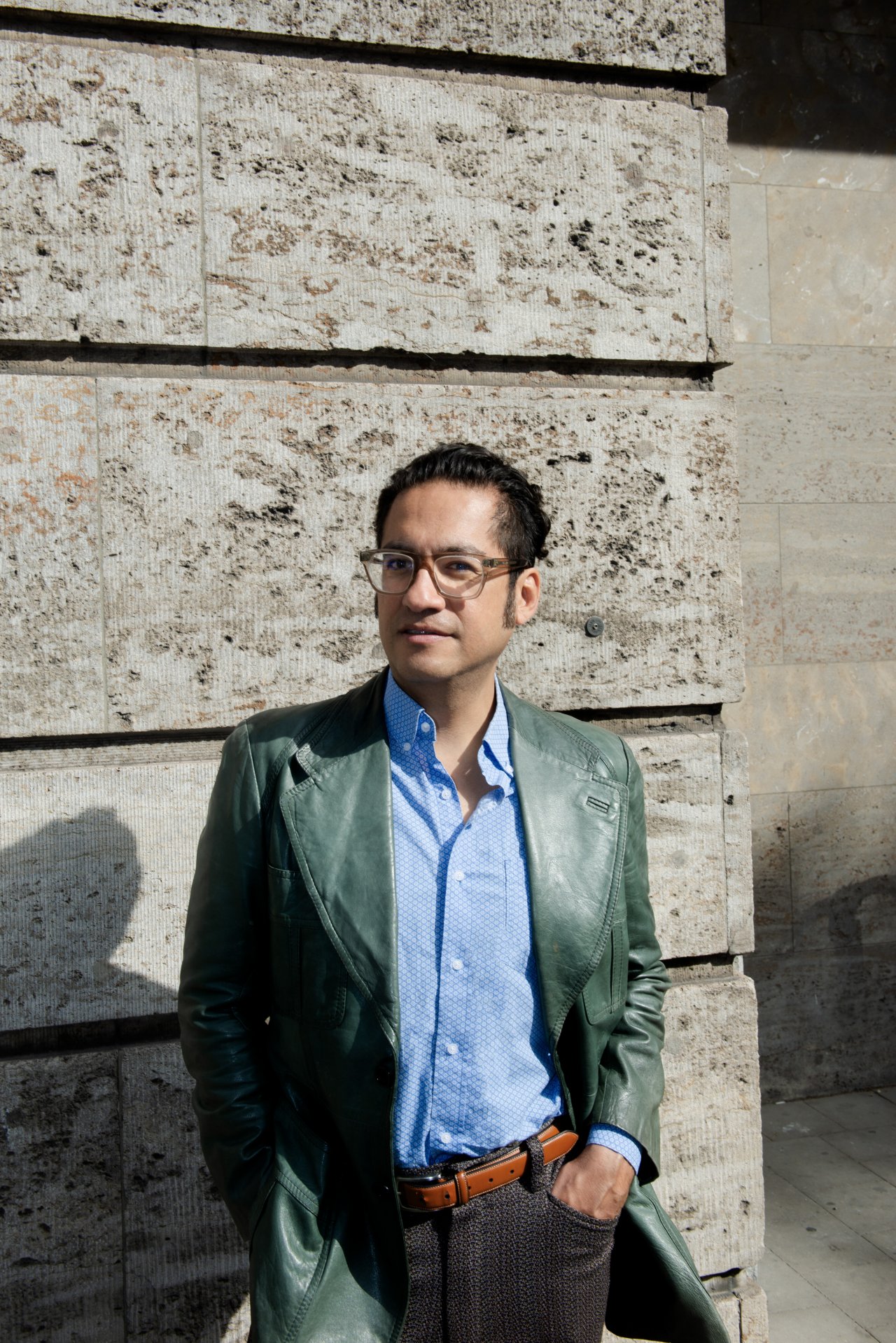
Another Magic MountainBy José Luis Chicoma
-
commentary
If THE NEW INSTITUTE Did not Exist, We Would Have to Invent ItBy Maja Groff
-

commentary
Rupture and RaptureBy Minna Salami