Frederic Hanusch
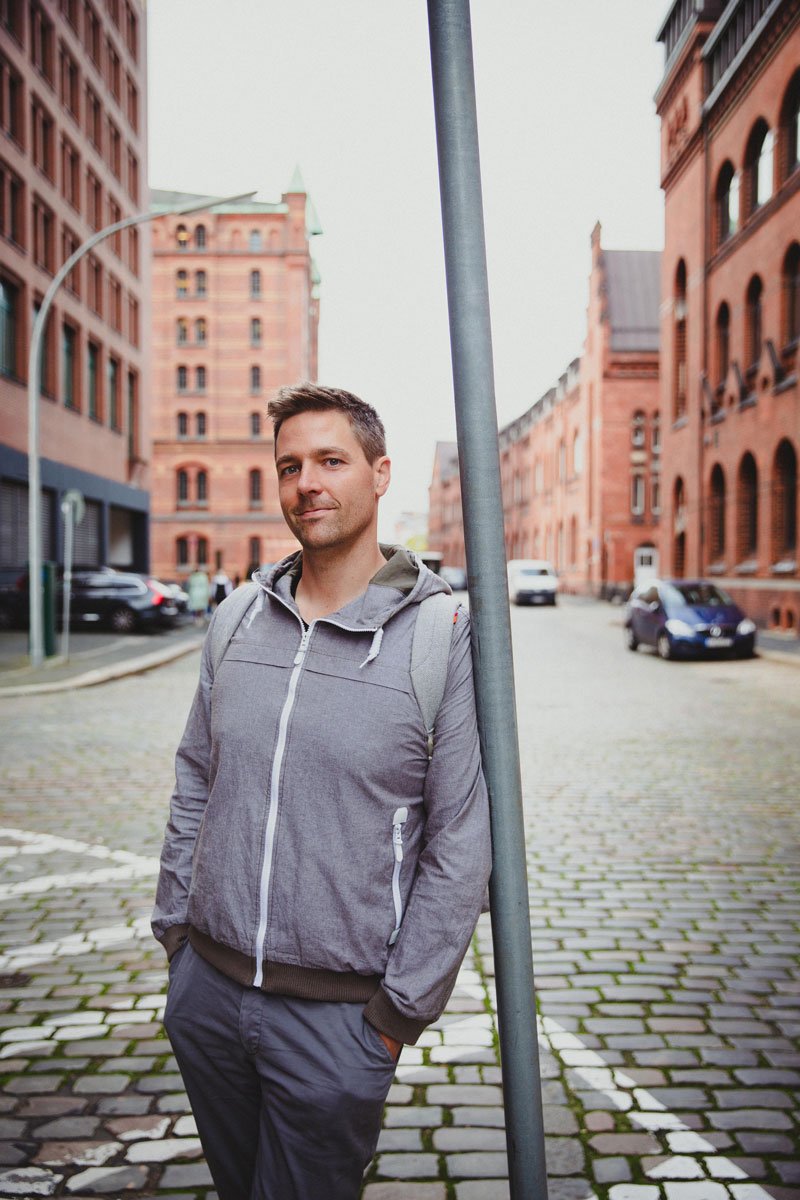
Frederic Hanusch
Frederic Hanusch is Professor of Planetary Change and Politics at Giessen University. Considering the stimulating science-art interface, he initiated the Planetary Scholars and Artists in Residence Program. His own research revolves around the intersections of democracy and planetary change.
At THE NEW INSTITUTE Frederic was working on themes related to The Future of Democracy and pursued a project on “Planetary Democracy”.
One Institute Is Not Enough: Form Follows Planet - Frederic Hanusch
1. Promise of a Prototype
When THE NEW INSTITUTE opened, it carried the unmistakable imprint of entrepreneurial imagination. Conceived as an experiment, TNI aimed to build an intellectual infrastructure equal to convergent ecological, democratic, and economic challenges that could nourish societal progress. The aim was to assemble transsectoral talent and test a model in real time. Like any prototype, TNI was meant to reveal both its own possibilities and its structural limits.
Yet because the prototype was singular, with one campus, one governance structure, one financial pipeline, it also bore the weight of every expectation. The fundamental questions that have emerged during its winddown phase might not only be whether TNI “succeeded” or “failed,” but also what an experiment of this scale teaches us about the kind of organizational form that world politics in the planetary age requires.
2. Design Brief
TNI began with a bold diagnosis. Climate destabilization, democratic erosion, and socioeconomic dislocation were not discrete disruptions but rather “nested crises,” each amplifying the others. This framing immediately set the institute apart from many conventional think tanks, which often treat such challenges as existing in policy silos. TNI’s three thematic portals, namely The Human Condition in the 21st Century, The Future of Democracy, and SocioEconomic Transformation, were designed as conceptual gateways, urging fellows to examine how value theory, constitutional imagination, and material infrastructures are woven into a single planetary predicament.
The centerpiece of its organizational architecture was the residential fellowship, short by scholarly standards, long by executive ones, and sufficiently diverse to generate the serendipity that TNI hoped for. The institute’s architecture attempted to mirror that entanglement: restored townhouses became livein studios where legal scholars conferred with performance artists, and earth system scientists lunched with documentarians. Nothing about this design guaranteed coherence, yet the deliberate friction prevented reflexive retreat into academic comfort zones. “Knowledge for what?” became a default provocation at weekly colloquia; no presentation ended without a discussion of translation or public resonance.
Yet creativity and continuity operate on different timescales. Drafting a visionary charter for ocean governance is one thing; shepherding that charter through the multiyear gauntlet of international negotiations is another. Academically developed models, rooted in peer review, iterative reflection, and collective verification, move on temporal scales fundamentally different from quarterly business and even four-year election cycles, and this divergence became decisive. By the time fellows had forged a shared vocabulary, residence terms were concluding, and collaborations scattered back to institutions whose reward structures rarely prioritize prolonged codevelopment. What remained was a formidable library of concept notes, but field deployment lagged behind the initial ambitions.
3. Kinds of Knowledges
A prototype is only as strong as the epistemic materials from which it is built. From its first call for fellows, TNI positioned itself as a meeting ground for very different knowledge cultures, ranging from peerreviewed expertise to artistic intuition to indigenous ecological literacies to policy craft. Here the legacy of two intellectual patrons, Abraham Flexner and Albert O. Hirschman, can offer guidance. Flexner, who founded the Institute for Advanced Study in Princeton, famously defended the “usefulness of useless knowledge.” His argument was not a plea for academic seclusion, but a recognition that unpressured inquiry often incubates the conceptual mutations upon which later applications depend. Hirschman, writing four decades later, advanced a complementary credo of “possibilism”: an orientation that privileges the unexpected, the heterodox, and the merely plausible over the probable. Both thinkers remind us that the space between speculation and solution is not empty; it is the generative middle where options are multiplied.
TNI tried to create that middle space. Some sessions resembled Flexnerian free exploration, others leaned toward Hirschman’s bias for the possible. But the institute lacked a shared grammar, a methodological approach for how these modes feed each other. Exploratory research should be protected as “reserved ground,” insulated from premature impact metrics; translation clusters could then harvest insights into fieldready prototypes as well as lift field expertise to the reserved ground; finally, adaptive teams might accompany those prototypes into messy publics, learning from failure and looping the data back to the speculative core, so that a genuine interplay between praxis and reflection emerges. No silver bullet exists for this task, despite the shelves of literature on transformative research. By choreographing useless knowledge, possibilist design, and pragmatic iteration, an organization can hope to navigate the long temporalities of planetary change while remaining responsive to nearterm political windows.
Crucially, such choreography also answers the equity question. When riverbasin stewards, data scientists, and performance artists all see their epistemic labor situated somewhere on the cycle – sometimes upstream as hypothesis generators, sometimes midstream as designers, sometimes downstream as testers – the hierarchy of “hard” over “soft” expertise begins to flatten. The lesson from TNI is therefore not that eclecticism guarantees impact, but that without institutional rituals binding disparate knowledges into a common tempo, eclecticism dissolves into parallel play.
4. Tentative Design Principles
If the prototype has clarified anything, it is that one architecture cannot accomplish all desiderata. Any successor initiatives might consider the following interlocking tentative design principles resulting from the TNI prototype.
Layer time. Multiyear residencies have to coexist with agile, highfrequency sprints tied to legislative calendars, cultural festivals, or COP deadlines. Without such layering, depth and timeliness pull in opposite directions. When an organization hinges on episodic residencies, it must either lengthen the arc of participation or create adjacent mechanisms, such as satellite hubs, followon grants, or embedded practitioner teams, that carry prototypes from inspiration to implementation.
Choreograph epistemic cycles. A genuine methodology needs to be developed that protects open exploration, channels promising ideas into design labs, and sends finished prototypes into realworld trials, then feeds lessons back to the exploratory core. This Flexnerstyle space for “useless” inquiry, followed by Hirschmanstyle possibilist design and pragmatic iteration, keeps diverse knowledges in motion and prevents eclecticism from stalling.
Dispatch artefacts. Deliverables should default to transferrable artefacts: opensource code, charter templates, immersive installations, documentary kits. Textual essays remain valuable, but prototypes that can be lifted wholesale into classrooms, municipal offices, political summits or art biennales travel faster. What matters is whether ideas acquire enough robustness to be replicated in contexts far from the originating campus.
Root research in place. One reason Black Mountain College mattered was its rural isolation, which forced participants to improvise holistic relationships among craft, agriculture, and intellectual life. A successor might similarly locate itself in a remote place, where the ambient environment enables as well as disciplines speculation through daily constraint. Strategic seclusion and periodic disconnection from urban circuits can sharpen longview thinking.
5. After the Prototype
It is tempting to view the end of TNI’s fellowship program as an anticlimax. A more fruitful reading is that the prototype has discharged its diagnostic function. It revealed what a single campus can and cannot do, and why our human and planetary conditions call for a constellation of experiments, not merely a solitary monument.
Institutional entrepreneurs therefore face a dual imperative: multiply prototypes and diversify their habitats. The question is no longer whether a secular monastery can solve nested crises, but how many distinct forms of what one might circumscribe as “proactive observatories” – organizations that continuously sense, interpret, and intervene – we can sustain, where they will take root, and how they might learn from one another without converging prematurely on one canonical model.
If entrepreneurship thrives on multiple bets, perhaps the next stage needs not one but several, each exploring distinct trajectories. The tanker TNI proved seaworthy but not nimble; future ventures may need a flotilla encompassing varied ships. One might refine the fellowship model; another could embed scholars in field laboratories; a third could operate as a dispersed civic network. Assuming that such a constellation was never realistic under a single roof, TNI’s partial closure should be read less as a cautionary tale than as evidence that institutional prototyping must iterate across a coordinated portfolio rather than a single flagship.
6. The Association Ahead
Even if the current populist cycle recedes and financial markets stabilize, the deeper predicament – how to inhabit a volatile planet – will persist. Looking ahead, what world politics in the planetary age demands is much more an association of organizational units in the form of so-called “proactive observatories,” in order to redefine world politics itself.
They should be able to study, prototype, and intervene in one continuous motion. They would monitor emergent political and planetary signals, convene situated residencies to interpret them, and co‑design interventions that iterate within real‑world milieus. Unlike a conventional think tank or institute, these organizational units could refuse the separation between desk and field. Teams might spend one season analyzing AI‑driven misinformation campaigns, the next mapping war‑stressed forests in post-conflict zones, and a third drafting legal briefs for inter‑species representation. Organizational cycles would dovetail with political and planetary ones: project calendars would align with periods of military occupation, lithium boomtowns in the Andes, growing seasons, or hurricane corridors rather than academic semesters.
TNI’s most enduring legacy may thus reside less in its archived publications than in the design prompts it leaves behind. Viewed through that lens, the story of THE NEW INSTITUTE is not finished; it has simply pivoted from proof of concept to opensource blueprint: a blueprint awaiting those ready to fund, to root, and to cultivate the next generation of organizations aiming to re-think, re-design, and re-do world politics in the planetary age. Form follows planet.
More Reflections
-
commentary
Form, Content, and Dimension of THE NEW INSTITUTEBy Britta Padberg
-
interview
Reflections on THE NEW INSTITUTEQ&A with Francisco Sagasti
-
commentary
Another Magic MountainBy José Luis Chicoma
-

commentary
If THE NEW INSTITUTE Did not Exist, We Would Have to Invent ItBy Maja Groff
-

commentary
Rupture and RaptureBy Minna Salami