José Luis Chicoma
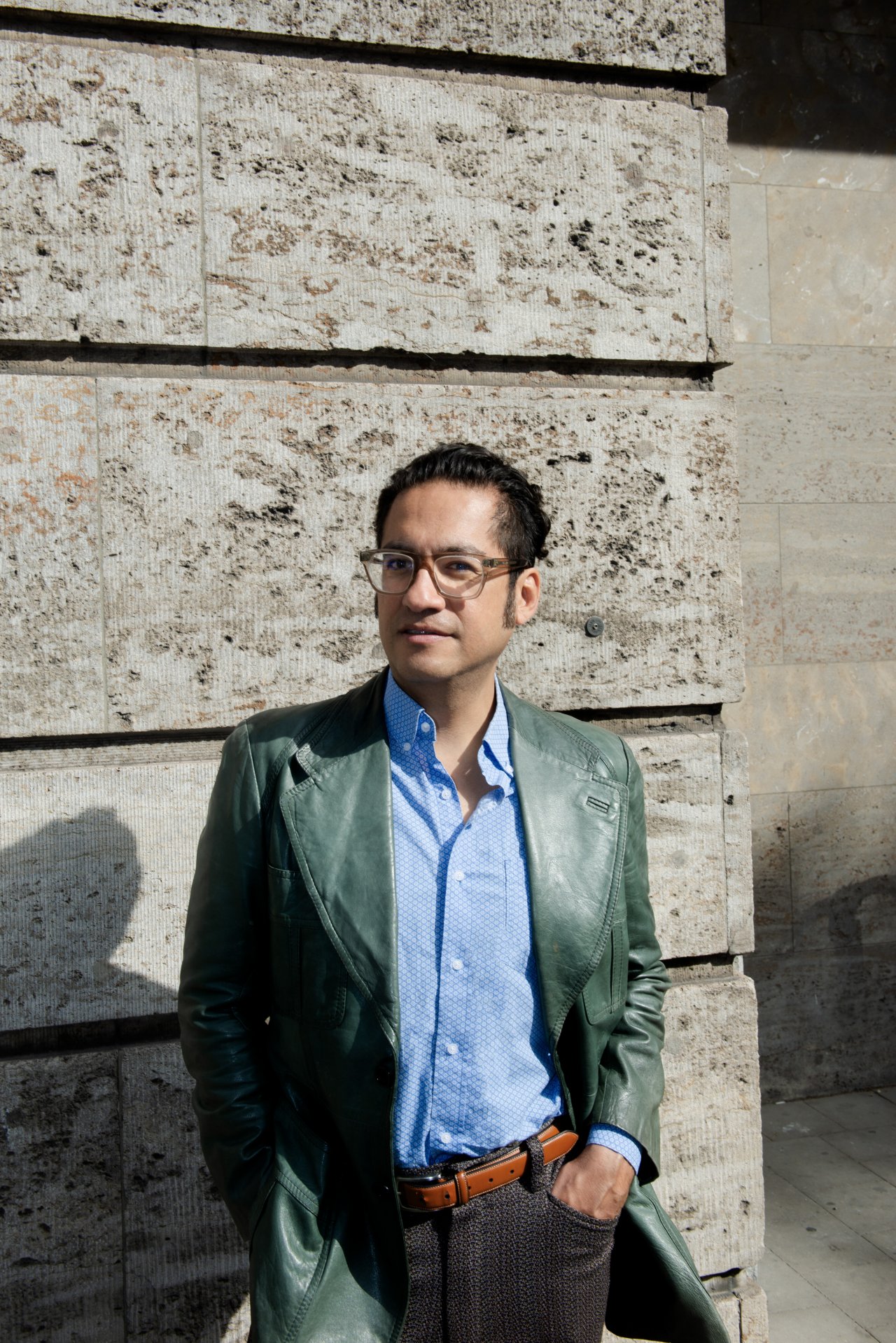
José Luis Chicoma
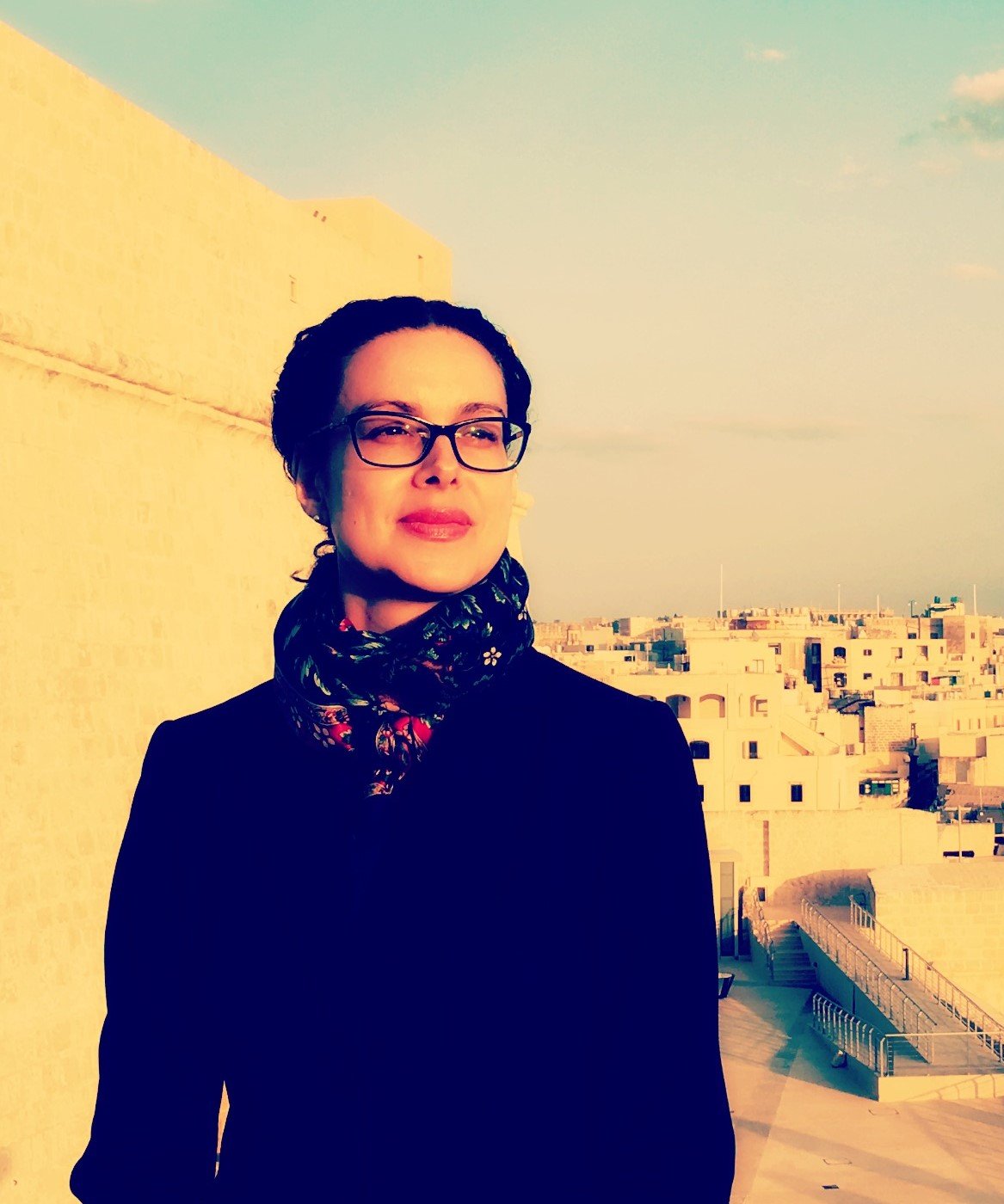
José Luis serves as Senior Advisor on Global Food Systems for the United Nations Development Program (UNDP). He is also a member of the team of experts that is developing the report on strengthening urban food systems for the High Level Panel of Experts on Food Security and Nutrition (HLPE-FSN).
At THE NEW INSTITUTE, José Luis was involved as Chair of the program The Future of Food: Power and Biodiversity in the Academic Year 2024/25.
Another Magic Mountain
One of my favorite activities at THE NEW INSTITUTE was the book club. It’s remarkable how the same pages can produce such different stories in people’s minds — and how those exchanges make your own reading feel both incomplete and suddenly richer.
One of the last books we read was The Empusium: A Health Resort Horror Story by Olga Tokarczuk, a sharp, surreal novel inspired by Thomas Mann’s The Magic Mountain. Both unfold in tuberculosis sanatoriums, high in the mountains, where patients live apart from the world and sink into a self-contained ecosystem of routines, engaging conversations, and peculiar social dynamics.
I don’t know if it was a coincidence that we read this book, but both novels reminded me of THE NEW INSTITUTE.
Part I: Community
There was no tuberculosis there, though the experience felt removed from everyday reality. THE NEW INSTITUTE was a place suspended between the urgency of the world — with all its terrible headlines — and the rare privilege of stepping aside from it. A bubble in the middle of Hamburg.
Inside, THE NEW INSTITUTE moved to its own rhythm — slower than my usual days crammed with meetings, conferences, and workshops, with never enough time for writing or reflection — yet the exchanges were unexpectedly intense and stayed with me well beyond the moment.
The Power and Messiness of Communes
One of the strengths of a place like this was how it allowed different forms of participation. At THE NEW INSTITUTE, some people thrived in the constant exchange, moving easily from one conversation to the next; others gravitated toward the quieter corners, joining in when the moment felt right. The best friendships often began not with shared projects but in unplanned encounters.
The same closeness that fosters connection can also sharpen tensions. There’s the steady undercurrent of gossip: sometimes lighthearted, sometimes carrying a sharper edge. Then there’s the pull toward belonging, what C.S. Lewis called “the lure of the inner ring” — that magnetic, almost irresistible urge to be part of the circle that seems to matter most. It’s a desire that can make people sycophantic, because there is always another ring beyond the one they’ve just entered. In communities like this, you see it magnified. The careerist scanning for the next buzzword to elevate their profile, quick to orbit whoever holds influence at the moment. The ones who treat every conversation as a transaction, weighing each exchange for its potential return.
I’ve never shared the instinct to idolize communes — in part because I’ve always felt how messy they can be. There’s a constant negotiation between individualism and collectivity, and that tension doesn’t disappear just because you’ve gathered interesting people in the same building.
When the Mix Works
And yet, the good outweighs the rest. What stays with me most are the moments of learning from colleagues whose work was light-years away from mine — people shaping debates on post-capitalism, democratic planning, or black feminism. Lunch conversations crossed disciplines and geographies, reshaping questions in ways that would not have emerged individually.
This didn’t happen by accident. The staff at THE NEW INSTITUTE thought carefully about who would be here together, and it showed. I avoid the word “curation” because it’s become a cliché, but here it applied — the mix of people and perspectives was intentional. I was reminded of how easily thinking can contract when you only move within your own field — how the same names, concepts, and arguments begin to loop, and the energy shifts from seeking answers to maintaining consensus. Stepping outside that circuit isn’t just refreshing; it opens up more space for your thoughts to evolve.
And sometimes that widening of perspective didn’t happen in a seminar room at all, but around a table. One of my most vivid memories from THE NEW INSTITUTE begins with a dinner.
Part II: Conviviality
It was a night of pure conviviality. It was the Advisory Committee meeting for The Future of Food program, and around the tables sat a who’s who from the field: leading scholars, policymakers, and representatives from some of the most influential organizations in the world. I had insisted that everyone be invited — staff, fellows, guests — so our visitors could experience the community in its full richness. This was no ordinary evening for me: it marked the close of a few intense days of discussion on how to push the global conversation on food systems toward the structural — the deep roots of why they are broken. The chefs designed a dinner where each plate reflected their usual care, centered on local, sustainable, and delicious food that brought people together.
The evening reminded me of how M.F.K. Fisher writes about food: with tenderness, care, and a belief that what we share on our plates can quietly shape what we imagine together. I’ve spent much of my career thinking about food — policy, systems, supply chains. At THE NEW INSTITUTE, I kept being reminded that food’s most enduring power lies in its ability to bring people together in ways that change the conversation.
Perhaps the most celebrated privilege of being at THE NEW INSTITUTE was the food itself. Authentic, seasonal food, prepared with care for the produce and a creative eye for reducing waste. But the nourishment went far beyond what was on the plate. It was found in the conversations that began over German potato soup, in the “inspiration talks”, and the animated exchanges at dinners that followed an outside speaker’s visit. It was nourishing because the exchanges were generous and rigorous at the same time — curious, challenging, and transformative.
That is what I miss most: not just the meals, but the constant flow of perspective, curiosity, and connection. A setting where a carefully assembled community, combined with everyday conviviality, created the conditions for deeper reflection and ambition.
Part III: Imagination
I arrived in Hamburg more frustrated than I cared to admit. Frustrated with the conversations about food systems that dominate the global stage — policymakers and international officials circling the same talking points, carefully avoiding the structural issues that matter most. Frustration with academia, where the same names and ideas seemed to orbit endlessly, leaving little space for anything genuinely new.
I was there to lead The Future of Food and Power, working with a team of eight fellows — a mix of scholars and practitioners, each among the most respected in their fields. We arrived with different perspectives, methods, and degrees of frustration with the state of the food systems debate, but also with a shared understanding that power shapes every aspect of our food systems, and that confronting it is essential for real transformation. Our task was to take that recognition further: to push one another through dynamic, creative, and sometimes uncomfortable exchanges toward specific, concrete recommendations. The community around us deepened this work, offering perspectives that questioned the dominant model and reimagined capitalism in multiple ways. This thinking flowed directly into our outputs — the report that was successfully launched, and a forthcoming book — aimed at the establishment, to persuade them to stop treating power as “the elephant at the table” and to propose clear policies on land ownership, food commodification, corporate concentration, governance, and more.
Talking about power in food systems has become unavoidable. A current wave of global disruption is pushing the world away from multilateralism toward a more fragmented order, where food is increasingly entangled in geopolitics. The war in Ukraine exposed the fragility and concentration of global grain and fertilizer systems; in Gaza, food has been openly weaponized. As trade tensions and conflict intensify, food insecurity is revealed as a political outcome. Meanwhile, the institutions meant to absorb these shocks are retreating, with shrinking aid budgets, strained multilateral agencies, and a turn toward government short-term protectionism.
That is why our report—and the forthcoming book—were developed precisely to confront this blind spot. We do so through concrete, structural policy recommendations: from redistributing ownership and control over land and resources, to curbing corporate power, and treating food as essential for people and the planet rather than as a commodity. These contributions are intended to actively shape and accelerate a broader shift already underway. This includes UNDP’s Food and Power Initiative, which I helped initiate and which brings together UN agencies, international organizations, experts, and scholars to center power in food systems, as well as parallel efforts across agroecology, fisheries, the affordability of healthy diets, and traditional and informal food markets.
From Echo Chambers to Envisioning a Different Future
When you’ve been in a field long enough, the bubble can shrink without you noticing. I’d reached the point of what Freud called “the narcissism of small differences” — focusing on minor disagreements with people whose overall goals aligned with mine, debating the fine print of positions that, in the larger scheme, were almost identical. That was part of what brought me to the institute: the need to step outside the food systems echo chamber and to find a different frequency, one that might carry new ideas further than the same well-worn arguments ever could.
At THE NEW INSTITUTE, I found something I hadn’t realized I was missing: a diverse community including a wonderful group of furious people. Not angry for the sake of it, but angry because they could see the collapse coming and refused to pretend otherwise. My own professional world is often too cautious, too eager to stay “constructive”, which, in practice, means avoiding anything that might make the powerful uncomfortable. This was a place where different visions weren’t just tolerated, they were encouraged. And it went far beyond the cliché of the progressive academic spaces I’ve known, where proclaimed open-mindedness often masks a reluctance to engage seriously with perspectives that fall outside accepted frames, narrowing the space for creation. Here, there was a real hunger to push beyond familiar frameworks and search for new ways of thinking about our future.
But I also discovered something else: I’m not built to run on fury alone. For me, anger can sharpen ideas, but I need a new and hopeful imagination of the future — something I’ve rarely found in my own field. I left THE NEW INSTITUTE with that vision in hand, hopeful — sketching the outlines of a “food utopia” that I’m now turning into a book. It’s a project born from deep frustration with how our systems fail, but also from a wish to offer something more than critique — to chart a future built on care and justice, even when everything around us points toward crisis and collapse. That experience now shapes how I approach my role as a member of the United Nations’ leading expert panel on food security and nutrition, where ideas are translated into policy recommendations that influence decisions and shape global debates on food systems.
What stayed with me most after leaving was a renewed sense of how imagination works — and how it can be nurtured. Sometimes it comes from deliberate practices: psychotherapy, long walks, deep reading. Sometimes from sustained exchanges within a diverse community that challenge assumptions and reshape how problems are framed. A conversation over dessert led to a question in a talk, which linked to a line in a book someone else recommended, to a new activity someone insisted you had to try, to a song, to a film — and you found yourself thinking about the original question in a completely different way.
Closing
THE NEW INSTITUTE is, above all, a generative experiment — a place that refuses the detachment of the ivory tower and chooses instead to engage directly with the world’s urgency and mess. What I’ve described here is my own experience — one in which I was both challenged and nourished — and I’m sure it was different for everyone else. In the end, it’s like a book club: we all read the same book, but imagine it differently, and when those imaginings are shared in community, something richer emerges.
That richness — and its impact — can’t be measured only in the books launched or the papers written. It’s also in the conversations and debates that keep unfolding months later, and the quiet shifts in how people see the world and their place in it. The results will take shape over years, and some may never be traced back to these beautifully designed spaces. But they will be there — in the work and in the possibilities that opened because this experiment existed.
More Reflections
-
commentary
Form, Content, and Dimension of THE NEW INSTITUTEBy Britta Padberg
-
interview
Reflections on THE NEW INSTITUTEQ&A with Francisco Sagasti
-
commentary
One Institute Is Not Enough: Form Follows PlanetBy Frederic Hanusch
-
commentary
If THE NEW INSTITUTE Did not Exist, We Would Have to Invent ItBy Maja Groff
-

commentary
Rupture and RaptureBy Minna Salami