Reflections – Minna Salami
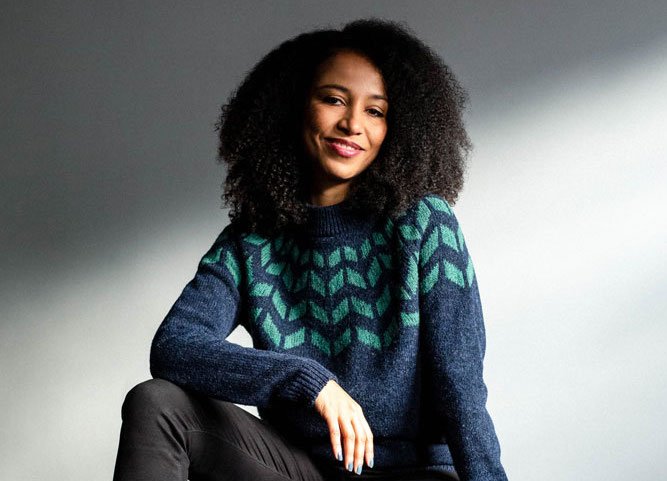
Reflections – Minna Salami
Feminist Author and Social Critic
At THE NEW INSTITUTE, after serving as a program chair for Black Feminism and The Polycrisis, Minna was a senior fellow for the Academic Year 2024/25.
Rupture and Rapture
One evening during my first year at THE NEW INSTITUTE, a small group of fellows lingered after the official celebration of the then newly opened Warburg Ensemble—the place we would come to call our intellectual and residential home. When most guests had departed, a dozen of us tested the new sound system, and soon found ourselves dancing—not in the perfunctory way people often do at academic gatherings, but with intentional movements that were both reverent and playful.
Had it been planned, the moment might have felt contrived, but instead it unfolded naturally. We moved in unrehearsed synchronicity, our pace shifting from slow to quick as we responded to changing rhythms. We improvised and exchanged freshly cut flowers, incorporating them into our collective exploration. Through movement and gesture, we seemed to express something about our shared experience that had eluded verbal articulation.
For me, it was an unforgettable moment: certainly, it was fun, but it was also a glimpse of what fellowship can become when it goes beyond intellectual exchange and touches something deeper, something alive.
That night has stayed with me because it revealed something rare. The institute was primarily an analytic space—I would even say, a disembodied one. Ideas were constantly tested, sharpened, debated, and critiqued with rigorous intensity. This intellectual rigor was, of course, the institute's strength. As stated on its website, "The institute is committed to incubating new ideas, expanding the influence of work already done, and making a tangible difference through its work." Yet, for ideas to indeed make a tangible difference, they must emerge not only from analysis and reasoning, but also from other dimensions of knowing—the felt, the intuited, the contemplative, and the bodily, as exemplified by our dancing. That spontaneity represented a break in a pattern, like the first signs of spring. It seemed to unconsciously express that our whole selves demanded to be part of the intellectual journey. It was both rupture and rapture at once.
I would like to reflect on my three years at THE NEW INSTITUTE through the lens of shifting seasons and emotional registers. My journey there unfolded in three distinct phases: reverie, resistance, and resonance.
Reverie
I arrived in Hamburg in 2022 to take part in the Human Condition in the 21st Century program, led by philosopher Markus Gabriel. Our group included distinguished philosophers, mathematicians, and filmmakers from diverse traditions, alongside renowned public intellectual Bayo Akomolafe. It was a remarkable privilege to spend time with these brilliant minds whose work expands intellectual boundaries as we collectively addressed the question: What does it mean to be human in the 21st century and how do we create a sustainable value system for our interconnected world?
The work was intellectually stimulating. Conversations flowed in unexpected directions while providing space for me to deepen my existing ideas and complete a manuscript. Despite this intellectual intensity, warmth and camaraderie remained constant. During that first year, we spent countless evenings talking and laughing over wine, cooking together, and exploring the institute, both as a physical space and a conceptual idea. The human condition wasn’t merely an abstract concept to be defined and analyzed, but something to be actively lived and deeply felt.
I would characterize that first year as one of reverie: a time when philosophy and friendship intertwined, where intellectual rigor and playfulness merged, and where both thought and fellowship possessed a dreamlike quality full of possibility.
Resistance
During my initial fellowship, I observed that while the institute was academically diverse, it lacked cultural and ethnic plurality. I successfully proposed chairing a program entitled Black Feminism and the Polycrisis. I invited six fellows from across Africa and its diasporas to Hamburg so that we could together explore how black feminist thought might illuminate the multiple overlapping ecological, political, social, and epistemic crises of our time. The polycrisis is essentially a crisis of entanglement, and black feminist theory has a long history of grappling with complexity in pragmatic ways. I knew it could offer ways of thinking that were as urgent as they were underexplored.
This was an exhilarating year, not only because of the brilliance of the people involved, but also because the subject matter demanded a reorientation of thought and because it was quite remarkable to receive support for such a program in a distinguished institute. In dominant public narratives, black feminism rarely appears, and when it does, it’s typically confined to matters concerning race, gender, or “soft” topics like the arts and well-being—not the polycrisis.
At the same time, it was a year of turbulence for the institute. As a collective, we were in disequilibrium: ambitious and experimental yet unsettled. Conflicts flared between differing visions, egos, and expectations. It was painful to witness the repetition of the very patterns we sought to transform––essentially problems of difference.
In hindsight, I see this temperamental year as part of our growth journey. Change doesn't happen somewhere “outside” of ourselves; it is achiral, meaning what happens within is mirrored externally. Any social change initiative hoping to avoid detachment must see society reflected in itself, apply new thinking internally first, and only then scale what it viscerally understands.
For me, this year was defined by our collective resistance to this kind of self-reflection. Tensions of varying degrees existed between the different programs, between leadership, staff, and fellows, between conviviality and conflict, and between conceptual ideas versus practical methods. The radical ambitions of my program, and the institutional realities of housing it within a young, European think tank, brought up further resistance.
Resistance, however, breeds honesty: it forces us to acknowledge tensions we might otherwise gloss over. This proved to be the most candid year of the three because wounds create vulnerability, and it is this vulnerability that ultimately paves the way for transparency.
Resonance
The sociologist Hartmut Rosa defines unpredictable and non-engineerable encounters as having the quality of resonance. My third year at the institute was indeed resonant in this unforeseeable way. I stayed on for another academic year as a Senior Fellow, and the institute had matured by then. The reverie and resistance of the first and second years had given it a sense of authentic identity. There was a heavy-heartedness too, as it had become clear that the institute would be discontinued.
The combination of these factors created a compassionate and focused atmosphere. Fellows collaborated generously, and conversations were probing without being fractious. A sense of goodwill permeated the air—an almost too-good-to-be-true community sentiment. I say almost because, in my experience, it is a feature of our times that people often pretend to be in community while feeling isolated. Therefore, I tend to think that the less a community speaks of itself as a community, the more truly it is one. And that was certainly the case this year. We occasionally acknowledged and even celebrated the genuine camaraderie, but mostly we simply lived it.
Yet it was also a quieter year with fewer collective social events. Nevertheless, the more subdued atmosphere allowed for deeper intellectual collaboration and more relaxed conversations. And I came to think of my wonderful Warburg home as a temple, in the sense of a space carved out for contact with something beyond the mundane where one might encounter the divine, to use a term rarely found in an annual report.
This third year became a period of reflection, where I began to envision how to apply what I had learned. I published my book; Can Feminism Be African? A Most Paradoxical Question—a project I had begun before arriving in Hamburg—and started conceptualizing my next venture: The Kaleidoscopic Method, alongside a complementary Substack called Kaleido.
Beauty and Consolation
Having the privilege to participate in a social experiment like THE NEW INSTITUTE across three cohorts—rather than just one as most fellows did—provides a unique perspective on the differences and commonalities across years. One observation that fellows made every year was that the fellowship experience was so distinctively eventful that it deserved to be immortalized as a film, TV series, or literary work.
I'm confident that one of the creative minds among the institute's alumni will eventually produce such a work. Looking back over these three years, I see an extraordinarily rich collection of experiences and characters, with precisely the right measure of intrigue to warrant it. Despite the flaws, I often find myself marveling at how remarkable it all was.
This was particularly evident in three key aspects: the intellectually stimulating conversations that occurred daily, the genuine and profound friendships that developed, and my program, which approached the polycrisis with both analytical rigor and creative expansiveness. It was important to me that we enriched our explorations by collaborating with artists and musicians, partnering with museums and cultural platforms throughout Hamburg, and—perhaps most memorably—directing a short creative film with my co-fellows Mac Premo and Adrianna Dufay that went on to win several awards.
In this sense, THE NEW INSTITUTE provided me with time and space, as well as beauty and consolation. Though I initially planned to stay in Hamburg for one academic year, I remained for three. I am deeply grateful for the beauty that THE NEW INSTITUTE offered: the rupture, rapture, reverie, resistance, and resonance. I cherish both the difficult and joyful memories not merely for their beauty, but also for the consolation they provide. In our increasingly anti-intellectual world I count myself fortunate to have been part of an institute that aimed—and in my view succeeded—to create something truly new.
That said, while I deeply enjoy philosophical discussions, should the institute re-emerge in a new form, as I sincerely hope it will, I hope it makes more space for dancing. I don’t only mean dancing as leisure, and not only to music, but rather in a broader spirit of playfulness, presence, and aliveness—the kind we discovered that unforgettable night at the Warburg Ensemble.
More Reflections
-
commentary
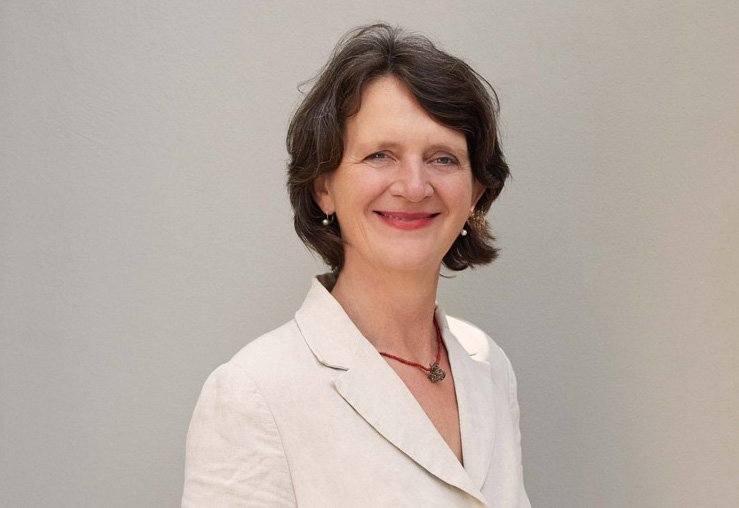
Form, Content, and Dimension of THE NEW INSTITUTEBy Britta Padberg
-
interview
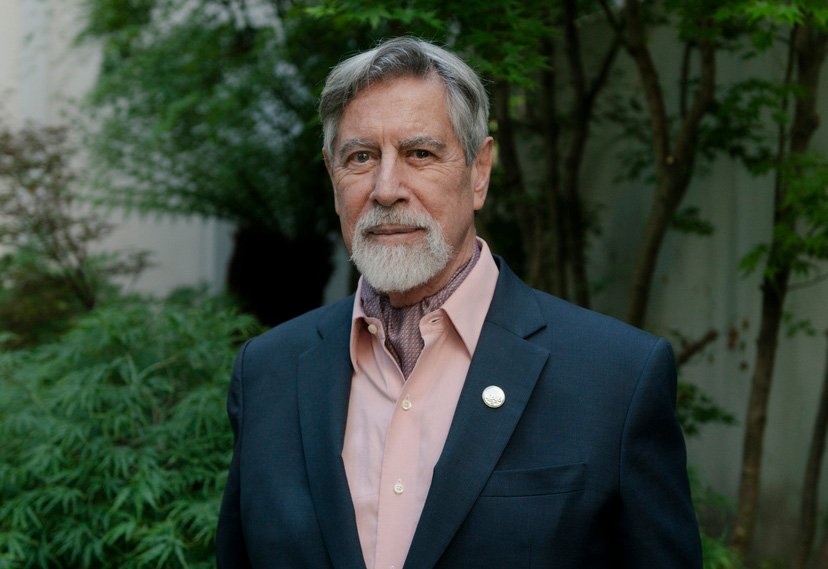
Reflections on THE NEW INSTITUTEQ&A with Francisco Sagasti
-
commentary
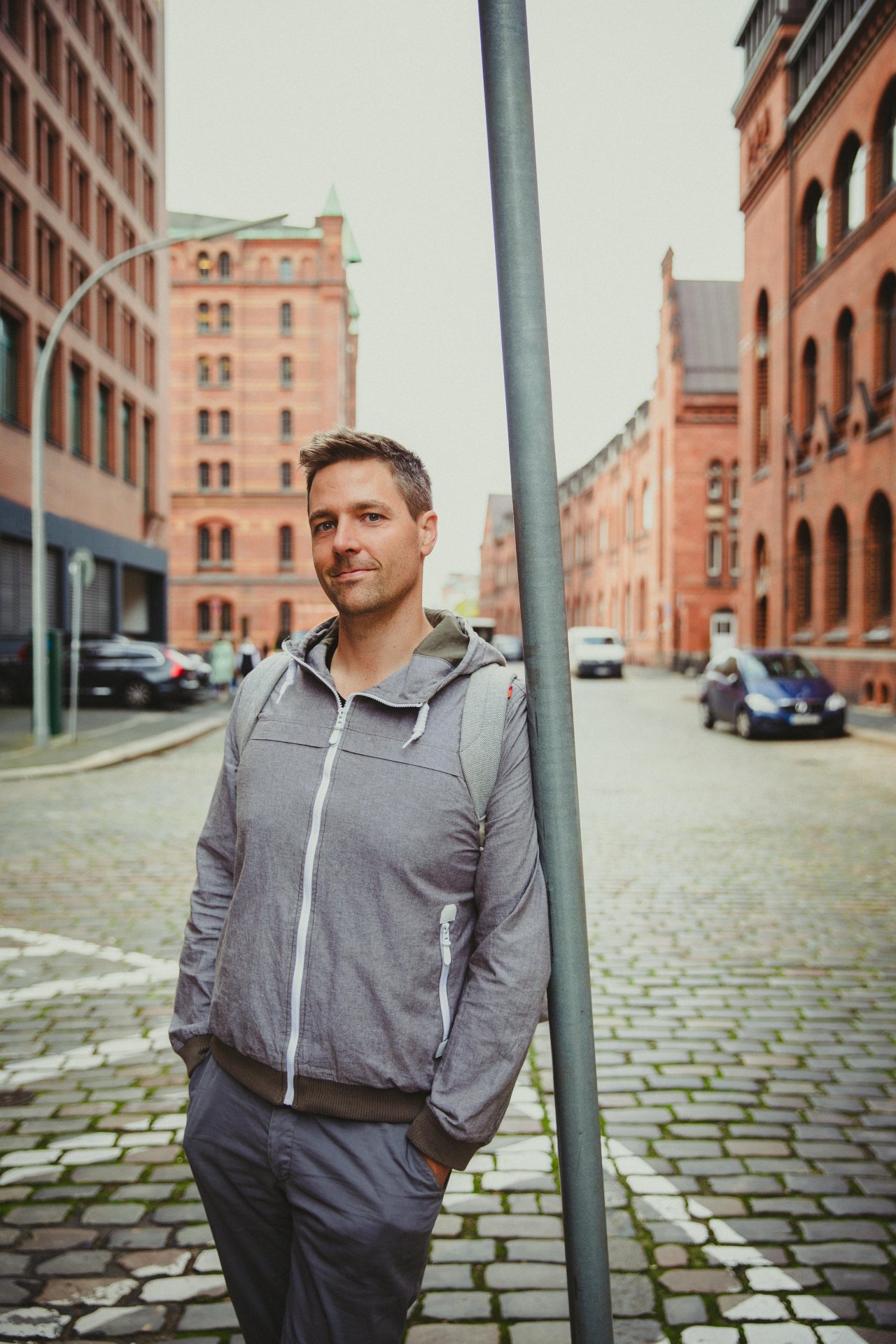
One Institute Is Not Enough: Form Follows PlanetBy Frederic Hanusch
-
commentary
Another Magic MountainBy José Luis Chicoma
-
commentary
If THE NEW INSTITUTE Did not Exist, We Would Have to Invent ItBy Maja Groff